
A shared roadmap for how CancerScan will communicate and amplify its results
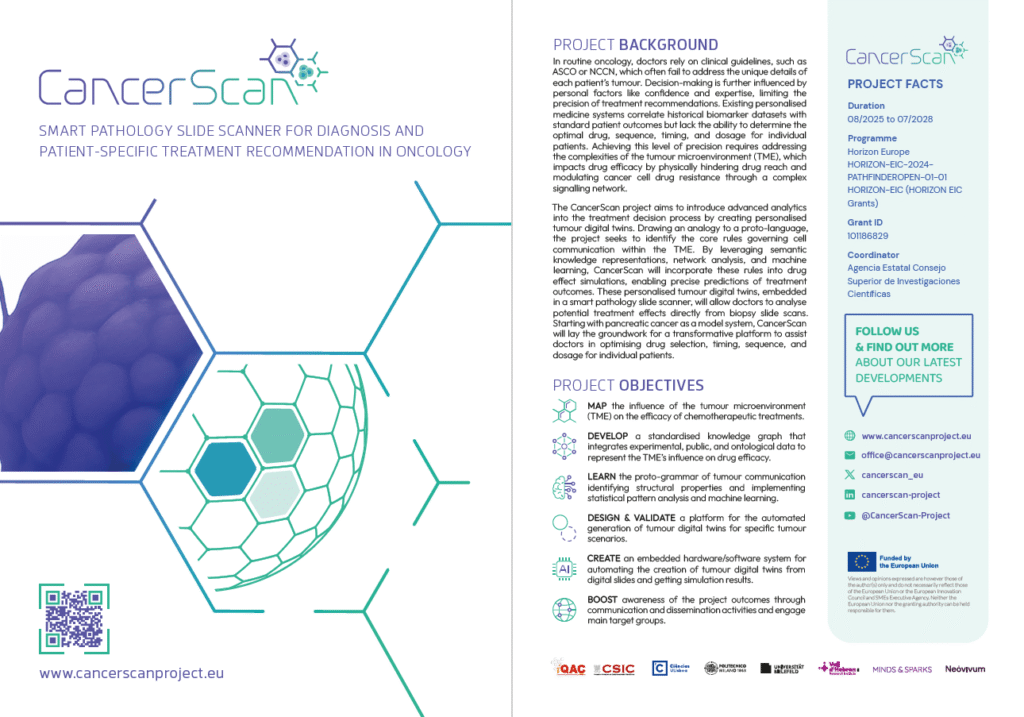
The CancerScan consortium has completed and submitted the Plan for Dissemination and Communication Activities, marking an important milestone in the project’s early implementation phase. The plan sets out a clear and coordinated approach for how the project will communicate its objectives, progress, and future results to a wide range of stakeholders over the coming months and years.
This strategic framework will guide how CancerScan speaks about its work, who it engages with, and through which channels. It is designed as a living document that will evolve alongside the project, ensuring that communication efforts remain aligned with scientific progress and stakeholder needs.
A structured and phased communication approach
The plan introduces a phased strategy that reflects the project lifecycle. In the early phase, activities focus on establishing a clear project identity and visibility through core assets such as the project website, visual identity, and social media presence. As the project progresses, communication will increasingly highlight emerging results, collaborations, and engagement opportunities, before shifting towards broader impact and feedback-oriented activities in later stages.
This phased approach allows the consortium to adapt messaging and channels over time, ensuring that information shared publicly is timely, accurate, and appropriate to the project’s maturity.
Clearly defined audiences and tailored messaging
The Plan for Dissemination and Communication Activities detail the target audiences of the project. It distinguishes between groups such as researchers, clinicians, hospitals, industry actors, regulators, investors, patients, and the general public, recognising that each group has different expectations, levels of expertise, and interests.
Messages will be adapted depending on the audience and context. This helps ensure that communication remains meaningful and accessible, while avoiding the disclosure of sensitive or premature information.
Partner-driven dissemination, coordinated at project level
Another central element of the Plan is the inclusion of individual dissemination plans from each consortium partner. These contributions reflect the diversity of expertise, networks, and institutional contexts within CancerScan.
Partners from research organisations, universities, clinical institutes, and industry have outlined how they will contribute to dissemination through scientific publications, participation in conferences, institutional communication channels, and stakeholder networks. Each partner is committed to leverage their strengths to extend the project’s reach at national and international level.
Channels, tools, and monitoring
The plan also provides an overview of the main communication channels that will be used throughout the project. These include the project website, social media platforms, visual identity materials, and targeted dissemination through events and publications.
- CancerScan project website: https://www.cancerscanproject.eu/
- CancerScan X account: https://x.com/CancerScan_eu
- CancerScan LinkedIn page: http://www.linkedin.com/company/cancerscan-project
- CancerScan YouTube channel: https://www.youtube.com/@cancerscan-Project
Looking ahead
CancerScan has a solid foundation for communicating its work in a structured, responsible, and impactful way. The plan will guide activities in the coming period and will be updated later in the project to reflect progress, lessons learned, and emerging opportunities.
By aligning strategic intent with partner-driven action, the deliverable ensures that dissemination and communication will actively support the project’s broader objectives.
Keywords
dissemination, communication, research, audience