CancerScan achieves its first milestone with new pancreatic cancer laboratory models
The CancerScan project has successfully achieved its first milestone, creating a diverse collection of laboratory models to investigate pancreatic cancer and its response to treatment.
Led by the Vall d’Hebron Research Institute (VHIR), with contributions from the Spanish National Research Council (CSIC), this achievement marks an important step towards the project’s goal of developing a smart pathology scanner to support cancer diagnosis and personalised treatment recommendations.
Creating models that reflect tumour complexity
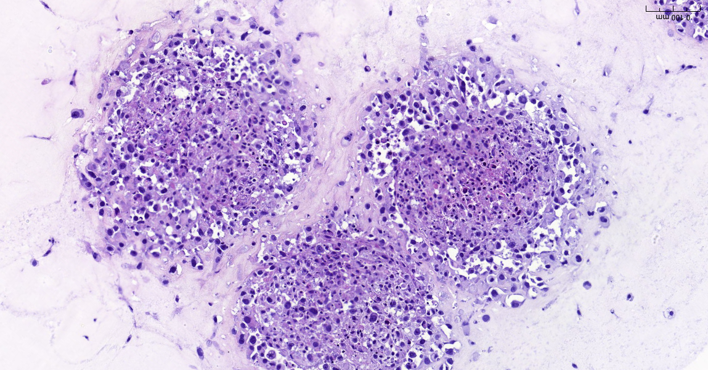
Pancreatic cancer is a complex disease in which cancer cells interact with different types of surrounding cells. To study these interactions, the CancerScan team has generated a range of three-dimensional cell models, known as spheroids.
Using three pancreatic cancer cell lines and different combinations of supporting cells, the team created models with varied cellular compositions and laboratory conditions. All configurations have been systematically documented and prepared for further experimental studies.
Investigating responses to chemotherapy
CancerScan has also conducted preliminary experiments to investigate how these models respond to FOLFIRINOX, a combination of chemotherapy medicines.
Five different spheroid configurations were tested over 72 hours. Four showed a decrease in cancer-cell viability, while the viability of supporting cells remained comparatively preserved. The fifth showed no apparent decrease in either cell population.
These initial findings demonstrate the potential of the models to help researchers study how different cell populations respond to treatment. Further research is needed to confirm and better understand these observations.
Building the foundations for personalised cancer care
The models and experimental data generated will contribute to the project’s future computational modelling activities, alongside information obtained from patients. This work will support the development of a smart pathology slide scanner for pancreatic cancer diagnosis and patient-specific treatment recommendations.
The next steps include evaluating another chemotherapy combination, gemcitabine plus nab-paclitaxel, and continuing to characterise the models. Detailed treatment-response results are expected in a subsequent project report, due January 2027.
With its first milestone achieved, CancerScan has established an important foundation for the research ahead, bringing the project one step closer to better understanding pancreatic cancer and supporting more personalised treatment approaches.
Links
https://www.cancerscanproject.eu/
http://www.linkedin.com/company/cancerscan-project
https://www.youtube.com/@cancerscan-Project
Keywords
Spheroids, chemotherapy, experimental study, cancer treatment, pancreatic cancer