Decoding cancer cell communication to improve pancreatic cancer treatment
Cancer cells do not act alone. Through complex communication networks and signalling pathways, tumour cells and their microenvironment coordinate adaptive responses that drive drug resistance. Understanding these interactions is key to improving cancer treatment.
Tumours are dynamic multicellular systems in which cancer cells continuously communicate with surrounding stromal and immune cells. This intercellular communication shapes tumour evolution, promotes therapy resistance, and limits treatment efficacy (Hanahan and Weinberg, 2011; Meads et al., 2009). By studying signalling pathways and interactomes in advanced pancreatic cancer organoid models, CancerScan aims to uncover mechanisms of resistance that can be exploited to improve patient-specific therapeutic strategies.
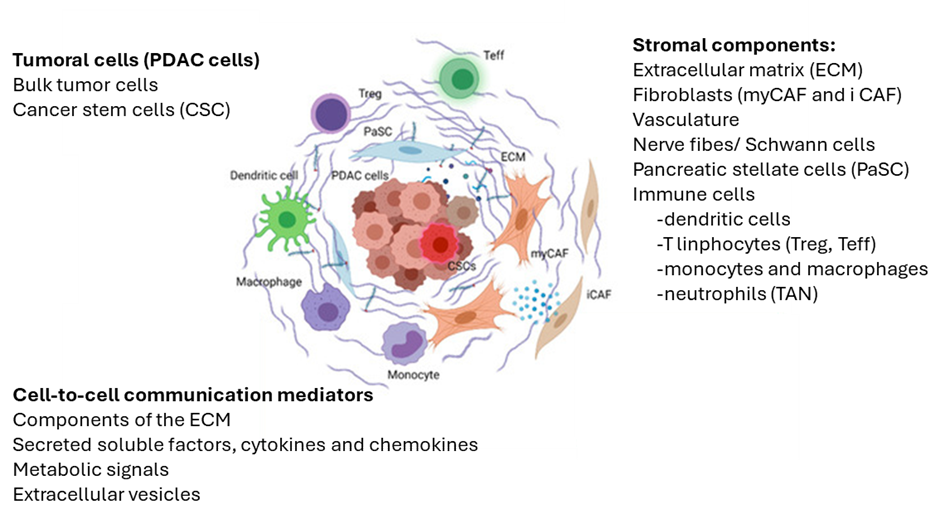
Cancer progression and response to therapy are not determined solely by genetic alterations within tumour cells. Instead, they emerge from a complex network of interactions between cancer cells and their surrounding microenvironment, known as the tumour microenvironment (TME). These interactions rely on coordinated cell–cell communication mediated by soluble factors, direct cell contact, and extracellular vesicles (EVs), collectively shaping tumour behaviour and adaptability (Dagogo-Jack and Shaw, 2018; Truong and Pauklin, 2021).
In highly aggressive cancers such as pancreatic ductal adenocarcinoma (PDAC), this communication network plays a particularly critical role. Dense stromal components, immune infiltrates, and altered extracellular matrices create a microenvironment that actively supports tumour survival and confers resistance to chemotherapy (Meads et al., 2009; Truong and Pauklin, 2021). As a result, even treatments that effectively target cancer cells in simplified in vitro models often fail in patients.
Cell–cell communication as a driver of drug resistance
Cell–cell communication allows tumour cells to sense and respond to environmental stress, including therapeutic pressure. Signals exchanged between cancer cells and stromal or immune cells can activate survival pathways, induce phenotypic plasticity, and promote the emergence of drug-tolerant cell states. These adaptive responses are now recognised as major contributors to minimal residual disease and tumour relapse (Dagogo-Jack and Shaw, 2018).
Extracellular vesicles have emerged as key mediators of this communication. By transferring proteins, nucleic acids, and metabolites between cells, EVs enable rapid reprogramming of both cancer and non-cancerous cells. In pancreatic cancer, EV-mediated signalling has been shown to modulate immune suppression, promote epithelial–mesenchymal transition, and enhance resistance to chemotherapeutic agents (Boelens et al., 2014; Binenbaum et al., 2018; Becker et al., 2016).
Mapping signalling pathways through organoid-based interactomes
To dissect these complex communication networks, CancerScan relies on advanced tumour organoid models that preserve key features of the tumour microenvironment. By combining pancreatic cancer cells with relevant stromal and immune components, these models allow systematic investigation of signalling pathways under controlled treatment conditions that better reflect patient tumours.
Within CancerScan, IQAC-CISC contributes by characterising the molecular interactome that emerges between distinct cellular populations within pancreatic cancer organoids, both before and after treatment with clinically relevant chemotherapeutic agents. Using proteomics-based approaches, including the analysis of cell-derived and EV-associated proteins, CSIC investigates how intercellular communication networks are rewired in response to therapy. Comparing organoids exposed to different drugs makes it possible to identify communication pathways and protein interaction nodes associated with differential drug sensitivity or resistance.
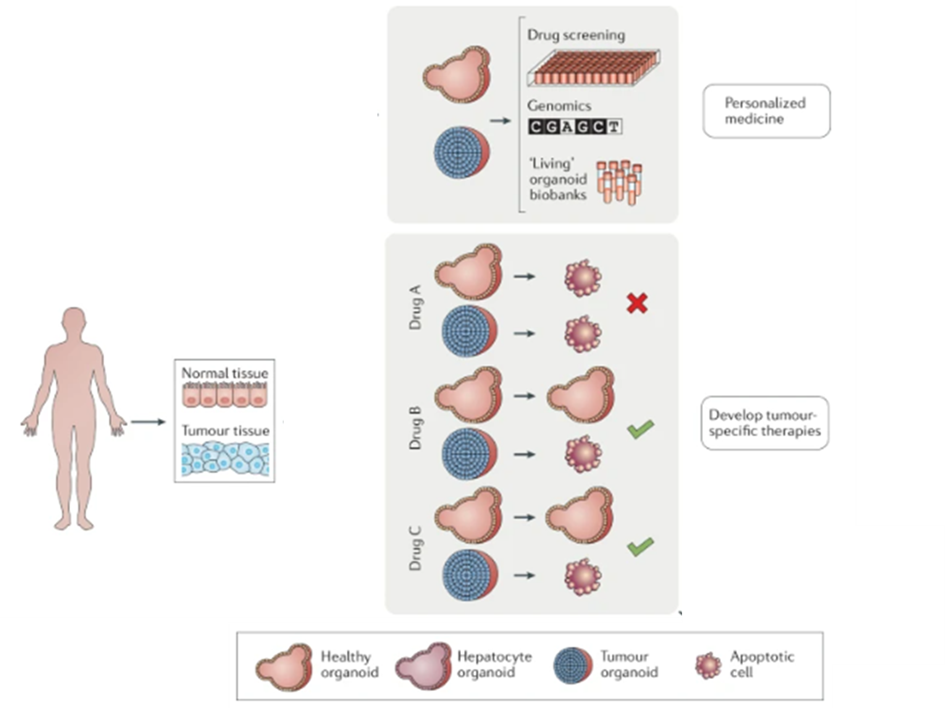
By integrating proteomic interactome data with functional readouts of drug response, this approach goes beyond single-pathway analysis. Instead, it captures resistance as a network-level phenomenon driven by coordinated adaptations across multiple cell types (Hanahan and Weinberg, 2011; Meads et al., 2009)..
Understanding cancer drug resistance requires studying tumours as communicating systems rather than isolated cells.
From communication networks to personalised treatment strategies
Understanding cancer drug resistance requires studying tumours as communicating systems rather than isolated cells. By integrating organoid-based experiments with comprehensive signalling and interactome analyses, CancerScan seeks to uncover how cell–cell communication drives drug resistance in pancreatic cancer.
This knowledge provides a mechanistic foundation for building biologically realistic tumour digital twins and for developing personalised treatment strategies that anticipate and counteract adaptive tumour responses. Ultimately, decoding cancer communication networks offers a path toward more effective and durable therapies for patients.
References
Becker, A. et al. (2016). Extracellular vesicles in cancer: Cell-to-cell mediators of metastasis. Cancer Cell, 30(6), 836–848.
Binenbaum, Y. et al. (2018). Transfer of miRNA in macrophage-derived exosomes induces drug resistance in pancreatic adenocarcinoma. Cancer Research, 78(18), pp. 5287–5299.
Boelens, M.C. et al. (2014). Exosome transfer from stromal to breast cancer cells regulates therapy resistance pathways. Cell, 159(3), pp. 499–513.
Dagogo-Jack, I. and Shaw, A.T. (2018). Tumour heterogeneity and resistance to cancer therapies. Nature Reviews Clinical Oncology, 15(2), pp. 81–94.
Drost, J. and Clevers, H. (2018). Organoids in cancer research. Nature Reviews Cancer, 18(7), pp. 407–418.
Hanahan, D. and Weinberg, R.A. (2011). Hallmarks of cancer: the next generation. Cell, 144(5), pp. 646–674.
Meads, M.B., Gatenby, R.A. and Dalton, W.S. (2009). Environment-mediated drug resistance: a major contributor to minimal residual disease. Nature Reviews Cancer, 9(9), pp. 665–674.
Truong, L.H. and Pauklin, S. (2021). Pancreatic cancer microenvironment and cellular composition: current understandings and therapeutic approaches. Cancers, 13(19), 5028.
Links
https://www.cancerscanproject.eu
Keywords
tumour microenvironment, cell–cell communication, extracellular vesicles, digital twins, cancer research, personalised medicine, CSIC, IQAC