
Understanding Treatment Resistance: VHIR’s Role in CancerScan
The Clinical Challenge
One of the greatest challenges in PDAC (Pancreatic Ductal Adenocarcinoma) treatment is that therapy selection currently relies on performance status assessment and clinical judgement. PDAC has two standard first-line chemotherapy options: 1) Folfirinox and 2) Gemcitabine + Nab-Paclitaxel, and no reliable biomarker to guide the choice between them. As a result, some patients receive a suboptimal regimen, experiencing toxicity with little or no benefit.
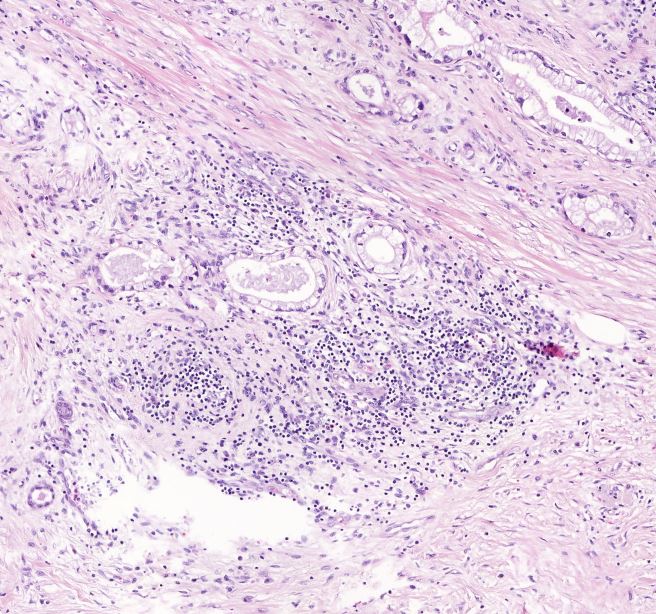
It is also well known that pancreatic cancer in particular is characterised by being highly desmoplastic, and where the TME (Tumour Microenvironment) confers a dense physical barrier preventing the access and effectiveness of anticancer treatments.
Building Digital Twins for Personalised Oncology
CancerScan aims to address this challenge through the development of patient-specific digital twins—advanced computational models capable of replicating an individual patient’s tumour and predicting its growth, behaviour and response to therapies. Such a platform brings together data from clinically validated experimental multicellular spheroid models that recapitulate the complexity of pancreatic tumours, including key components of the TME.
As a CancerScan partner, VHIR contributes with its expertise in pathology and tumour microenvironment biology, combining in a synergistic manner the capabilities of two different research groups. The Translational Molecular Pathology (TMP) group, within the Pathology department, and the Clinical Biochemistry, Drug Delivery and Therapy (CB-DDT) group.
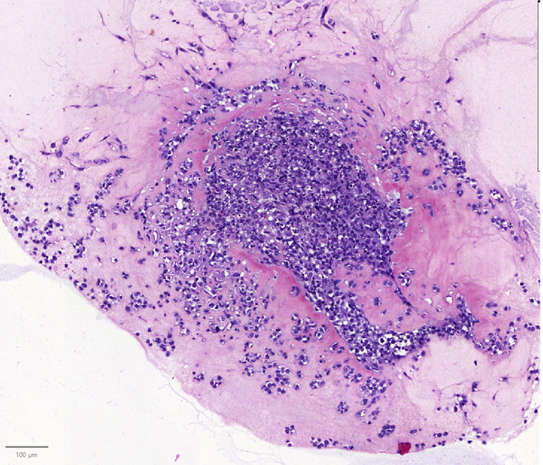
At this initial stage of CancerScan we have engaged with the challenging task of developing and validating experimental spheroid models that capture key biological features of pancreatic tumours and their TME. These models will be used to train CancerScan’s predictive algorithms and digital twin framework. To ensure the resulting predictions are clinically meaningful, findings from spheroid-based experiments are systematically compared with patient histopathology images and real-world clinical outcomes. This validation process, performed by experienced pathologists, critically supports the digital twin accuracy in predicting a realistic tumour behaviour and a tailored treatment response.
The importance of High Quality Clinical Data
For this purpose, more than 30 experimental spheroids were designed, and the most clinically relevant have been selected to continue with an in-depth multi-omic study under the two main treatment regimens. Spheroid selection was based on their morphological characteristics, ensuring they faithfully mirror the diverse scenarios encountered in daily clinical practice. To further refine these models, the team is performing extensive immunohistochemistry (IHC) analyses to characterise both the spheroids and the original patient tissues.
On the other hand, retrospective clinical datasets (150-200 cases) will provide context, which cannot be captured through molecular or image analysis alone, to validate the algorithm’s outcomes. Information about treatment histories, patient outcomes, disease progression, and therapeutic responses allows researchers to evaluate whether predictive models accurately reflect real-world scenarios.
In this context, VHIR has conducted a comprehensive Data Protection Impact Assessment (DPIA) to proactively identify and mitigate risks associated with the processing of sensitive health data. All information from the subjects is pseudonymized before being accessed by the researchers, and the project employs high-level security protocols. By adhering to these strict GDPR standards, VHIR ensures that patient confidentiality remains uncompromised.
Links
VHIR website: https://vhir.vallhebron.com/en
Clinical Biochemistry, Drug Delivery and Therapy group website: https://vhir.vallhebron.com/en/research/clinical-biochemistry-drug-delivery-therapy#1
Pathology department website: https://hospital.vallhebron.com/es/asistencia/especialidades/anatomia-patologica#2
Project website: https://www.cancerscanproject.eu/
LinkedIn channel: http://www.linkedin.com/company/cancerscan-project
X channel: https://x.com/CancerScan_eu
YouTube channel: https://www.youtube.com/@cancerscan-Project
Keywords
PDAC (Pancreatic Ductal Adenocarcinoma), Tumor Microenvironment (TME), Spheroids, Clinical Validation