
Politecnico di Milano Joins CancerScan to Advance Precision Oncology through Digital Twins
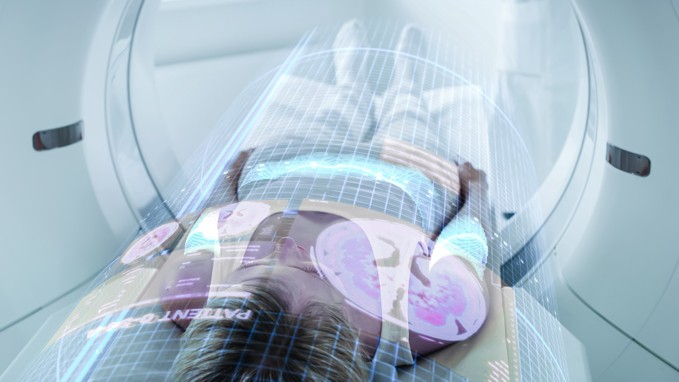
Politecnico di Milano is part of CancerScan, the EU project shaping the future of precision oncology through tumour digital twins. Led by Marco Santambrogio and Davide Conficconi, the PoliMi team is developing energy-efficient GPU-FPGA computing solutions to turn complex medical data into clinically actionable insights; bringing digital twin technologies one step closer to real hospital deployment.
As precision oncology moves toward patient-specific digital twins, the ability to process vast medical datasets quickly, accurately, and sustainably becomes a critical challenge. Within the CancerScan project, Politecnico di Milano brings forward-leading expertise in heterogeneous GPU-FPGA computing to design scalable, energy-efficient infrastructures that transform advanced tumour simulations into clinically deployable tools for personalised cancer care.
Politecnico di Milano is playing a key role in CancerScan, a European initiative focused on enabling precision oncology through patient-specific tumour digital twins. The PoliMi team, from the NECSTLab of the Dipartimento di Elettronica, Informazione e Bioingegneria (DEIB), contributes advanced expertise in computer architecture, heterogeneous computing, and energy-efficient system design, addressing the challenge of transforming complex biomedical data into clinically actionable insights within realistic time and sustainability constraints.
The team is led by Marco Santambrogio, Full Professor of Computer Architecture and Director of NECSTLab, and includes Davide Conficconi, Assistant Professor and co-lead of the technical activities, together with Virginia Tasso, Francesco Pesce, and Leonardo De Grandis, all PhD students at NECSTLab. Santambrogio and Conficconi jointly guide the architectural vision and technical execution of PoliMi’s contribution, ensuring strong alignment between research innovation and clinical deployment.
Within CancerScan, the Politecnico di Milano team focuses on the design of heterogeneous GPU–FPGA computing infrastructures tailored to medical workloads. The project’s ambition to integrate digital pathology, parameter extraction, and tumour simulation into a unified digital twin pipeline requires processing massive datasets and running complex models under strict timing and energy constraints. Traditional CPU-centric solutions are insufficient to meet these demands at scale. By combining the high-throughput capabilities of GPUs with the low-latency and energy-efficient characteristics of FPGAs, the PoliMi team aims to deliver computing solutions that are both powerful and deployable in real hospital environments.
“CancerScan challenges us to rethink computing as part of the clinical workflow,” said Marco Santambrogio. “Together with Davide, we are leading the effort to design architectures that make tumour digital twins practical tools for precision medicine, not just research prototypes.”
Davide Conficconi, Assistant Professor at Politecnico di Milano, plays a central role in coordinating the technical development of the hardware–software co-design approach. His leadership ensures that accelerator technologies are effectively mapped to CancerScan’s computational pipeline, balancing accuracy, performance, and energy efficiency.
The PoliMi team will characterise the computational flow of tumour digital twin generation, identify critical bottlenecks, and define validation methodologies to assess both numerical accuracy and system-level performance. This work directly supports CancerScan’s objective of bridging the gap between cutting-edge research and clinical impact, contributing to sustainable and scalable precision oncology solutions at the European level.
Through its leadership in heterogeneous medical computing, Politecnico di Milano strengthens CancerScan’s mission to bring digital twin technologies closer to clinical practice, enabling more personalised, data-driven cancer care across Europe.
Links
Politecnico di Milano website: https://www.polimi.it/
NECSTLab website: https://necst.it/
NECSTLab LinkedIn: https://www.linkedin.com/company/necstlab/
Project website: https://www.cancerscanproject.eu/
LinkedIn channel: http://www.linkedin.com/company/cancerscan-project
X channel: https://x.com/CancerScan_eu
YouTube channel: https://www.youtube.com/@cancerscan-Project
Keywords
Tumour Digital Twins; Medical Imaging; Heterogeneous Computing; Hardware Acceleration; GPU–FPGA Co-Design; High-Performance Medical Computing; Energy-Efficient Architectures; Domain-Specific Accelerators: Scalable Healthcare Solutions; Sustainable Digital Health